

 Compliance Survey on Quaternary Ammonium (QACs) Biocides in China
Quaternary ammonium compounds (QACs) are among the most widely used disinfectants in the world and are used on medical devices, common surfaces, food containers and the human body etc. To assess the risk/hazards posed by these substances the Chinese health inspection and disease control authority sampled 193 commercial QAC disinfectants (on the market since 2009) and analyzed the product origin, composition, use scope, target microbial organisms and label claims. A total of 12 imported and 181 homemade QAC disinfectants were sampled from 21 provinces, consisting of 187 liquid formulations, 5 spray formulations and 1 powdery formulation. Adherence to GB GB26369-2010 was investigated. It was revealed that benzalkoniums, DDAC and DDAB are the most common QACs and over 20% of human-use disinfectants contain excess level of QACs.

2018-06-08
China Consults on 576 MRLs for 118 Pesticide Active Ingredients
On 31 May 2018, China MoARA invited a 30-day consultation on 576 MRLs for 118 pesticide active ingredients and 4 testing methods of pesticide residues in plant-origin food.
 An Introduction to Food Use Biocides under Chinese Disinfectant Regulations
China's food and catering market has grown rapidly and with this growth we have also seen an increase in usage of food use disinfectant products which has led to concerns revolving around food safety. China’s disinfection legal framework is seriously underdeveloped compared with EU and the US who have established complete assessment, registration and authorization system of biocides and food contact substances/materials. In this analysis, we will explore the scope and limitation of Chinese food use disinfectants regulations, as well as the pitfalls to look out for when accessing China’s emerging market.
Inventory Management of Food-Use Disinfectants
In 2010, former NHFPC issued the “Inventory of Raw Materials/Ingredients for Food-Use Disinfectants”(hereinafter as “the Inventory”), consisting of 47 active ingredients and 21 raw materials allowed for use in the disinfection of food, tableware, food-contact instruments, equipment and packing materials, as well as food containers. Furthermore, food additives that included into the “GB 2760-National Food Safety Standard for Food Additive Use” can also be used as auxiliary components in food-use disinfectants.
2018-06-01
South Korea Consults on 2 Support Biocide Regulations
On 30 May 2018, the Korean Ministry of Environments opened a 40-day public consultation on 2 draft regulations in support of the “Law 1511-Act on the Safety Management of Household Chemical Products and Biocides”. The Act was promulgated on 20 Mar 2018 and will be implemented on the 1st of Jan 2019.

2018-06-01
Taiwan EPA to Raise Administration Fee for Environmental Agents
On 28 May 2018, Taiwan EPA solicited opinion on a new charging policy for environmental agents. Administrative charges on certain registration and license categories would be doubled and charging scope would expand to include pesticide for export only purpose, experimental use permit (EUP) and certificate supporting tariff reduction for imported technical materials.
 Agricultural Sustainability and Challenges to China’s National Food Security
China's population is estimated to peak by 2030 reaching 1.5 billion and per capita food demand will be stable at 500 kg annually. To maintain self-sufficiency in food supply, China needs to increase grain output from 617.9 million tons in 2017 to 634 million tons by 2020 and 700 million tons by 2030. This article will take a look at the historical data on grain production and agricultural technology in recent decades. We will also look at the major challenges facing China such as environmental issues, decreased arable land and slow growth in productivity.
 Mandatory Premarketing Testing of Disinfectants and Sterilizers/Disinfectors in China
Since the last time NHFPC/NHC approved new disinfectant or sterilizer/disinfecting apparatus was back in 2014, when the management of existing products was delegated to provincial departments, hygienic and safety assessment became the only feasible way to have access to the disinfectants and sterilizers market in China. To help improve compliance with China’s disinfectant/sterilizer regulations, this article will focus on the enforceability and most practical issues involved in the premarketing assessment of disinfection products.
 China NHC Considers Inventory Management on Antimicrobial Agents
On 25 Apr 2018, Shanghai NHC hosted an internal workshop to clarify common technical and regulatory issues which arose during the trial opening of the national electronic filing system of disinfection products. The new system collects safety assessment reports, product information and company details of all existing disinfection products. It was also revealed that a new inventory of antimicrobial ingredients is expected to be released this year which will define the scope of general household products and disinfection products. In future household products using biocidal ingredients and ambiguous efficacy labeling claims will no longer be able to evade filing or NHC's apprval requirements.
 China Renews Technical Regulation for Quaternary Ammonium Disinfectants
China NHC recently revealed that the amendment to the national standard, “GB 26369-2010 hygienic standard for quaternary ammonium disinfectants”, has been finalized and the revised edition has been submitted to the SAC (Standardization Administration) for final approval.
 Regulatory Status of Disinfectant Wet Wipes in China
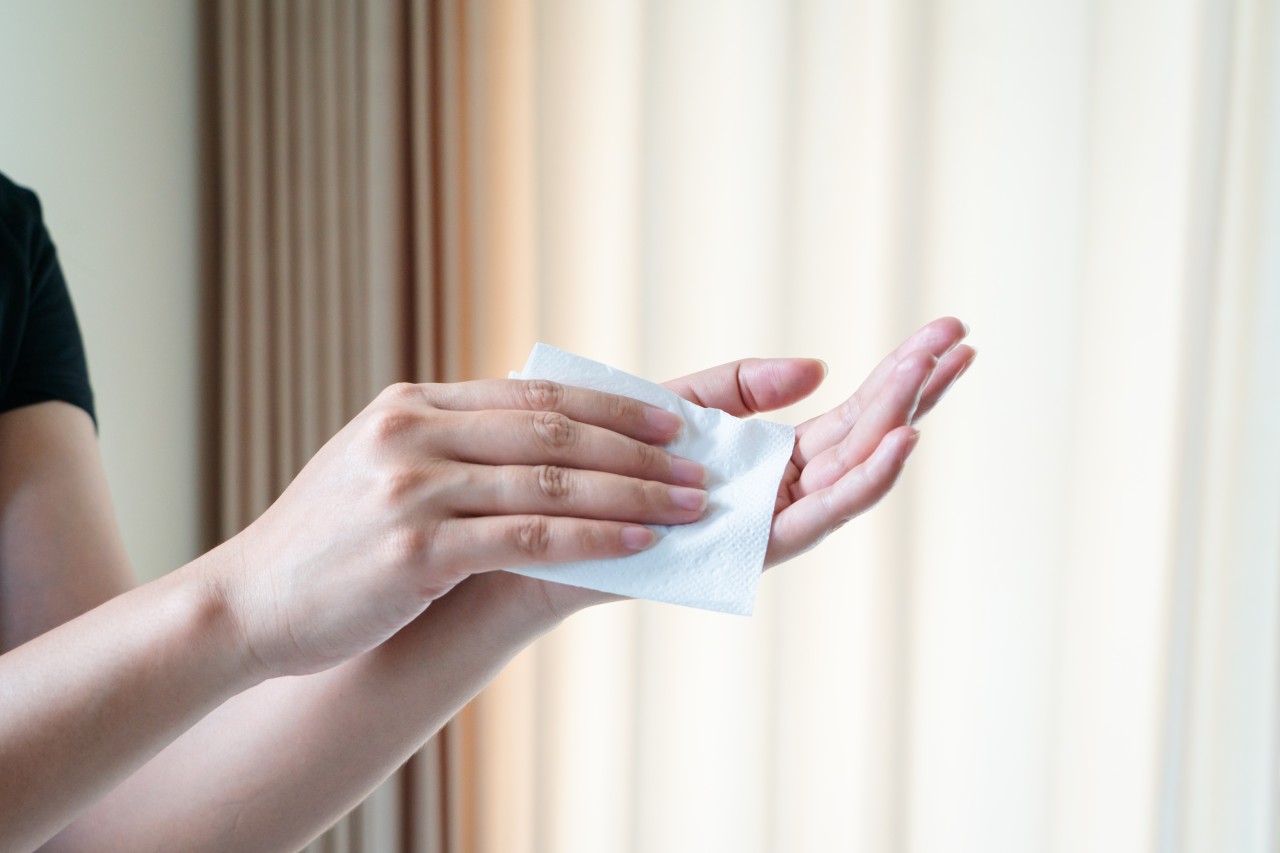
In China, disinfection products are defined as disinfectant, sterilizing agent, antimicrobial agent, medical/common disinfector/sterilizer, packed-sterilized articles with sterilization marking, biological and chemical indicators of sterilization effect and various hygiene products including wet wipe and hygiene/disinfection wipes. The definition, classification, national registration/ provincial record filling of novel/existing disinfectant and sterilizer are complete while the legal framework of other disinfection products types is comparatively absent. As disinfectant-carrying wipes are rapidly developing in China, the term “vehicle disinfectant” has been proposed by the NHFPC/NHC and would affect regulation of certain consumer products.
With the rise of emerging infectious diseases such as SARS and human avian Influenza and so on, a sort of wet wipes called "hygiene wet wipe" or "disinfection wet wipe" have appeared on the market and are developing rapidly in China. As wet wipes are traditionally categorized as hygienic products and exempted from premarketing evaluation on its antimicrobial/disinfection claims, safety concerns have long been discussed by regulators. In this article, we will explore the statutory definition, classification, technical criteria, and regulatory forecast of wet wipes.
Evolution of Product Definition
Wet Wipes refer to fabric or paper-based products used for the cleansing/ germicidal/disinfecting of human body, common surface and other surfaces. The hygienic and germicidal criteria for wet wipe were firstly specified under the “GB 15979-2002: Hygienic Standard for Disposable Sanitary Products” together with other disposable products such as gloves, respirators, sanitary napkins and diapers, etc.
In 2011, China issued a national standard exclusively for wet wipes, the “GBT/27728-2011: Wet Wipes”, which classifies wet wipes into human-use wipes and article-u
Most Popular
Opinions or requests
Please enter your opinions or requests regarding this site in the space below.
Submit