

2020-08-14
China Ends the Emergent Market Entry of Disinfectants
On August 4, 2020, the General Office of the National Health Commission released the final notice regarding the enhanced regulation of disinfection products during the Covid-19 control, which was consulted early on June 19. Apart from the aims of resuming normal record-filing management of non-new disinfectants and ensure the safety and effectiveness of disinfection products produced in China and intensifying the ex-post surveillance of disinfection products already been placed on the market, the emergently placed disinfectants will have a longer transitional period to complete the normal record-filing procedures until December 31, 2020.

2020-08-14
A Brief Retrospect on China’s Pesticide Registration in H1 2020
China approved 474 pesticides during the first half of 2020, of which 445 are agricultural pesticides and 29 are hygiene pesticides, representing a bounce back from H1 2019 of only 99 pesticides. The number of pesticides approved down sharply in 2019 due to the new data requirement enacted. It is unlikely to see a return to the heady numbers in 2017 and 2018.

2020-08-14
China MoARA Designates 11 Labs for Pesticide Registration
On August 4, 2020, the Chinese Ministry of Agricultural and Rural Affairs released the Announcement 321 to designate 11 testing institutes for pesticide registration and amend the non-technical matters of 9 labs designated previously.

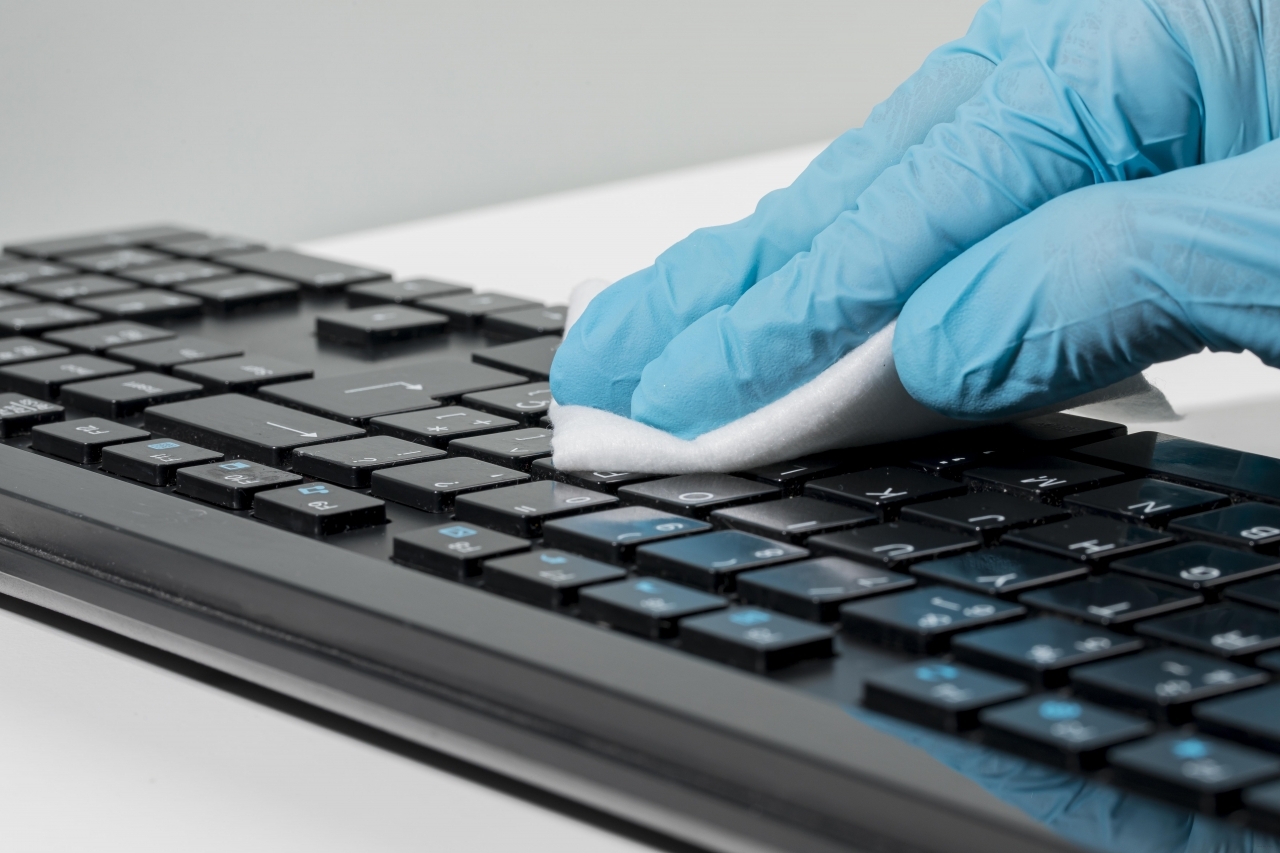 Interpreting the Mandatory Requirements for Hygienic Wet Wipes: WS 575-2017
In 2017 China NHFPC (now knowns as NHC) promulgated the “WS 575-2017 Hygiene Requirements for Hygienic Wet Wipes”. Since its implementation in March 2018, the mandatory standard has played an active role in market regulation, but some of its contents were also misinterpreted/wrongly enforced by manufacturers, law enforcers and users. In a recent scholarly journal, NHC officials reiterated the background and significance and outlined the key technical requirements, as well as clarified the scope, legal positioning and intersection with other disinfection products, in the hope of safety and effective use of health-related products, particularly under the circumstance of Covid-19 pandemic.
Background
Hygienic Wet Wipes are a category of disposable sanitary products widely used in households, schools, catering and tourism service and medical institutions, etc., for the cleaning and bactericidal treatment of hand, skin and mucosa, as well as ordinary object surface. Hygienic wet wipes have been piecemeal mentioned in several regulation and standards:
Catalog of Disinfectant Products
GB/T 27728-2011 Wet Wipes
GB 15979-2002 Hygienic Standard for Disposable Sanitary Products
None of them had offered specific technical requirements targeting hygienic wet wipes. Compared GB/T 27728-2011 and GB 15979-2002 that respectively apply to general wet wipes (with no biocidal effect) and all sanitary products, WS 575-2017 put forward comprehensive requirements on raw materials, germicidal performance, product safety, labeling and manual specific to hygienic wet wipes. offering greater operability in postmortem surveillance.
Hygienic wipes are Class III disinfection products which can be directly placed on the market without completing any evaluation and record-filing formality with the health authorities whenever the following conditions are met:
The manufacturer has obtained the hygienic license of disinfection products (only homemade products

2020-07-06
China ICAMA offers Option for Amending Registration of Multi-element Pesticides
On 1 July 2020, China ICAMA issued an official letter to its provincial subsidiaries regarding the registration amendment to multi-element pesticides. China revamped its pesticide regulation system in 2017 with elevated requirements, aimed to reduce the number of pesticides registered and manufacturers. The multi-element pesticides with the same active ingredients and formulation type can be registered with a maximum of 3 compounding ratios. The new registration and renewal of pesticide with an extra compounding ratio will no longer be acceptable under the new regulation.

 China’s Organic Fertilizer Market Would Reach 227 Billion Yuan by 2023
Organic fertilizer is a category of fermented fertilizers obtained from animal manure and plant/animal residue and the use of organic fertilizers has a long history in China. But in recent decades, the percentage of organic fertilizer in total nutrient input has steadily reduced from 99.9% in 1949 to 20% in 2010 and bottomed at 5% to 10% today. China’s per-unit-area rate of chemical fertilizer is 443.5 kg per hectare, almost 3 times the global average level of 120 kg per hectare and twice the internationally-accepted safety limit of 225 kg per hectare. This gives China an ever-increasing agricultural output at the expense of soil fertility: 26% and 44% of the farmland has the fewest organic matter and organic carbon of less than 1%. 64%, 53% and 40% of the farmland are in serious deficiency of Calcium, Magnesium and Sulphur. Since China launched the “Action Plan for Zero-growth of Chemical Fertilizer and Pesticide Use” in 2015, as well as other agricultural development policies thereafter, this reviving sector has witnessed a double-digital increase for the past few years and the demand would reach 227 Billion Yuan by 2023. In the course of China’s agricultural revitalization of quality enhancement and green development, it is vital for agribusiness enterprises to have a better understanding of the industrial actuality, key driving force and the developing tendency of China’s organic fertilizer market.
Industry Characteristics
Organic fertilizers can be conceptually classified into 3 commercialized categories: refined organic fertilizer, organic-inorganic compound fertilizers and microbial organic fertilizers and their market percentage were 43.5%, 17.6% and 38.9% respectively:
Refined organic fertilizer- Obtained thought the fermentation or decomposition of organic materials and typically formulated into powdery, granular, or liquid form.
organic-inorganic compound fertilizer-blended or compounded products of inorganic fe
2020-06-23
China NHC to Terminate Emergent Market Entry of Disinfectants
On June 19, 2020, the General Office of the National Health Commission opened a 30-day consultation on a notice concerning the enhanced regulation of disinfection products during the Covid-19 control, aimed to resume the normal record-filing management of non-new disinfectants and ensure the safety and effectiveness of disinfection products produced in China, as well as intensify the ex-post surveillance of disinfection products already been placed on the market.
Most Popular
Opinions or requests
Please enter your opinions or requests regarding this site in the space below.
Submit