


2021-03-15
China to Accredit 5 Testing Institutes for Pesticide Registration
On March 11, 2020, China MoARA solicits opinion on the 31st and 32nd batched of testing institutes approved for pesticide registration tests.
 Overview of the Trend in China’s Pesticide Registration in 2020
As of December 31, 2020, 41885 pesticides of 714 active ingredients have been registered in China, consisting of 39299 agricultural pesticides and 2576 public health pesticides. Since 2013, the number of pesticides newly registered each year has grown by an average rate of 5%. As China introduced new data requirements in 2018, the number of pesticides newly approved plumbed a new depth of only 205 in 2019. Although 805 pesticides were approved in 2020, the number is still far below the level years ago. Apart from the elevated registration requirements, the increasing M&A events and elimination of SMEs lead by industrial consolidation and environmental rectification is another cause of the decreasing number, which will be a chronic condition and beneficial to China’s “quantity reduction and efficiency increasing” towards pesticide use.
Green Development
In recent 8 years, over 90% of the pesticides approved were slightly or low toxic and the figure has risen to 100% in recent 4 years. Emulsifiable Concentrates (EC) is the most registered formulation type and contributes the most VOCs, but its percentage has continued to drop. Wettable powder has had the same situation. Meanwhile, Suspension Concentrate(SC), Water Dispersible Granules and Oil Dispersion have maintained annual growth of 9.1%, 6.7% and 17% respectively. In addition to the rapid growth of Flowable Concentrate for Seed Coating (FS), Capsule Suspension (CS) and other environmentally friendly formulations, a novel formulation type, Dispensor(DR) has also been increasingly registered.
Product Category
Insecticides take up the highest proportion of all products and have been the most registered category before 2016, but that is set to change with the rapid growth of herbicides and fungicides. These three categories now have a relatively equal percentage in newly registered products.
The number of public health pesticides has maintained at around 2500 owing to the stag
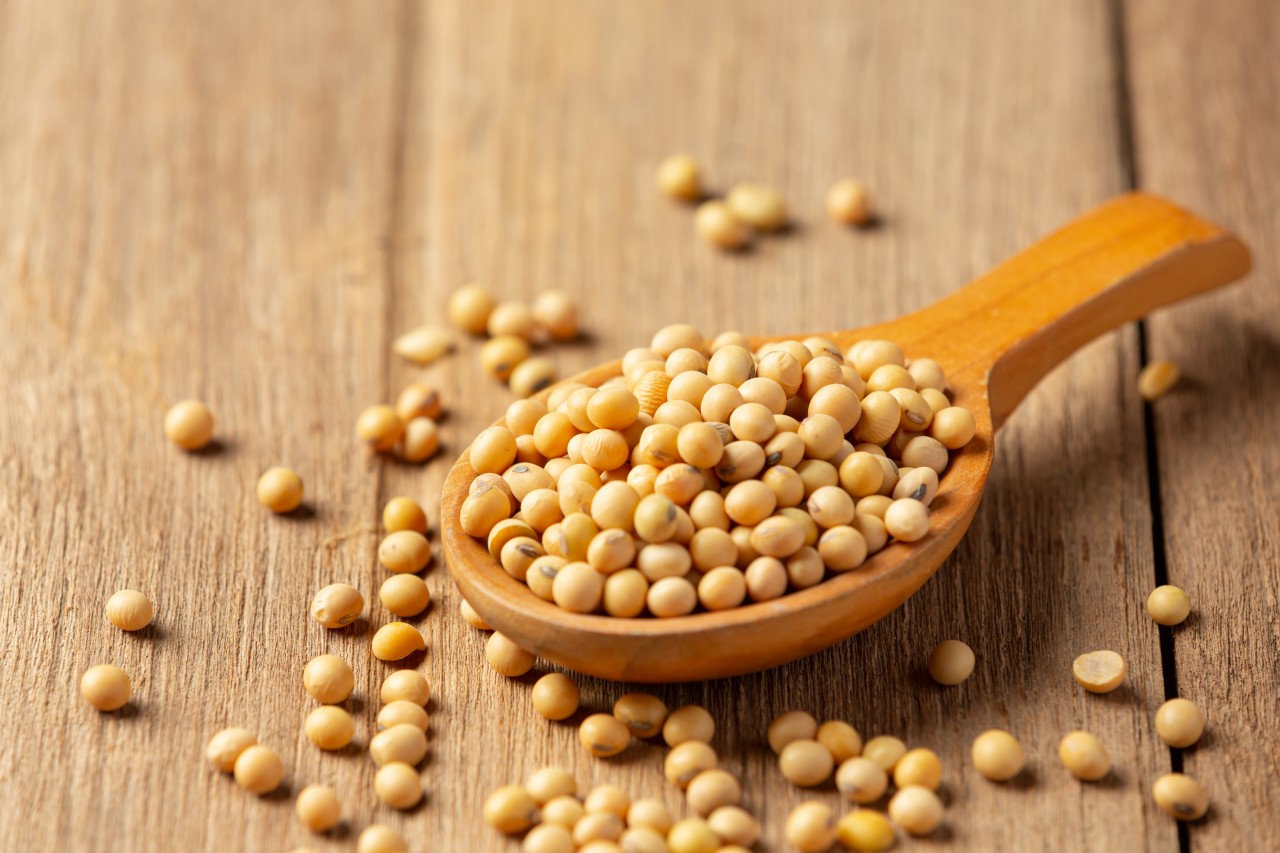 What Lies behind China’s Soybean Revitalization Plan?
According to China's customs statistics, in 2020 China imported 100.33 million tons of soybean, exceeding the historical level of 95.53 million tons in 2017. It took China only 25 years to increase hundred-fold its imports and take over 60% of global soybean trade. The total arable land area fell to the lowest registered level at 120 million hectares, while its protein feed demand continued exploding, forcing China to allow its long-standing stranglehold on domestic soybean oil and soybean meal supply to be covered by a number of foreign grain giants in order to save its farmlands for cereal production.
Over the years, China’s trade supply has been affected by specific government policies and the agricultural reality in some of its trading countries, especially the Sino-US trade conflict and Covid-19 supply chain issues. To stabilize soybean supply, China has begun exploring new trade partners, including Russia, Ukraine and other African “Belt and Road” countries, well-known for their non-GM soybean plantations. These partners have now become an important part of China’s high-value edible bean market. With the longest history of soybean plantation and the highest diversity of germplasm in the world, China expects to see a difference in the global non-GM soybean market by accelerating crop variety research and by taking advantage of scale advantages and financial tools.
Non-GM Market: Overall Self-Sufficient but Rapidly Growing
China addresses imported soybeans (mostly GM) and homegrown soybeans (All non-GM) differently:
GM soybeans are imported through state-back dealers and can only be sold to bean crushers. About 97% of the soybean oil and soybean meal produced in China comes from imported GM soybeans.
Only non-GM soybeans are allowed for direct consumption and for bean products/condiments production. About 80% of homegrown soybeans are for edible purposes.
In recent years, China has taken proactive

2021-02-23
China MoARA Approved 8 Labs for Pesticide Registration
On February 22, 2021, China MoARA issued Announcement 401 to specify the test scope 8 testing institutes newly designated for pesticide registration, of which 7 were approved for residue study and 3 each approved for efficacy, environmental impact, and product chemistry tests.

2021-01-22
China MoARA Announced the Fulfillment of Agrochemical Use Reduction Initiative
In 2015, China launched the “action plan for zero-growth of agrochemical uses by 2020”, aimed to increase agrochemical utilization efficiency to 40% by 2020. In a MoARA press release on January 19, 2021, the scientific measurement shows that the current efficiency is 40.2% for chemical fertilizers and 40.6% for pesticides used on 3 major food crops including rice, wheat, and maize. The Ministry also summarized the achievements with substantive data, reflecting substantial changes in China’s crop protection and fertilization sectors,as well as disclosed a new goal of increasing the efficiency by another 3 percent by 2025.

2021-01-11
China MoARA Approved 3 New Pesticide Active Ingredients
On December 28, 2020, the Chinese Ministry of Agricultural and Rural Affairs issued Announcement 379 to approve 6 newpesticides of Broflanilide, Quinotrione and Allantoin.

2020-12-29
China Enacted Air Emission Standard for Pesticide Manufacturing
On December 25, 2020, the Chinese Ministry of Ecology and Environment and the State Administration for Market Regulation jointly issued the national standard,“GB 39727-2020 Emission Standard of Air Pollutants for Pesticide Industry”, which will mandatorily take effect on January 1, 2021.

2020-12-18
China to Implement Paperless Customs Clearance of Pesticides
On 16 December 2020, the Chinese Ministry of Agricultural and Rural Affairs (MoARA) solicits opinion on draft measures for the import and export surveillance of pesticides, aimed to optimized administrative procedures and facilitate trade. The most remarkable change of this move is the paperless operation of customs clearance: once the pesticide exporter/importer obtained the electric import/export notice through the Chinese International Trade Single Window(Single Window), the customs will release the cargo without collecting paper documents.

2020-08-14
China MoARA Designates 11 Labs for Pesticide Registration
On August 4, 2020, the Chinese Ministry of Agricultural and Rural Affairs released the Announcement 321 to designate 11 testing institutes for pesticide registration and amend the non-technical matters of 9 labs designated previously.
2020-07-06
China ICAMA offers Option for Amending Registration of Multi-element Pesticides
On 1 July 2020, China ICAMA issued an official letter to its provincial subsidiaries regarding the registration amendment to multi-element pesticides. China revamped its pesticide regulation system in 2017 with elevated requirements, aimed to reduce the number of pesticides registered and manufacturers. The multi-element pesticides with the same active ingredients and formulation type can be registered with a maximum of 3 compounding ratios. The new registration and renewal of pesticide with an extra compounding ratio will no longer be acceptable under the new regulation.
Most Popular
Opinions or requests
Please enter your opinions or requests regarding this site in the space below.
Submit