



From 1 to 5 June 2026, the Committee for Risk Assessment (RAC) of the European Chemicals Agency (ECHA) held its 77th plenary meeting. The harmonised classification and labelling (CLH) of trifluoroacetic acid (TFA) and its inorganic salts was one of the key topics. According to the meeting minutes and publicly available regulatory information, RAC has formed its opinion on hazard classifications for TFA relating to reproductive toxicity, persistence and mobility, which would place TFA and its inorganic salts within a more stringent CLP hazard identification framework.
It should be made clear that a RAC opinion is not the same as the completion of a formal EU legislative amendment. The European Commission would still need to advance an adaptation to technical progress (ATP) amendment to Annex VI of the CLP Regulation, followed by Member State discussion, voting and transitional arrangements before a legally binding harmonised classification can apply. At the current stage, therefore, the upgrade of TFA classification sends a clear regulatory signal, but there remains a multi-year window before it is fully implemented across the EU.
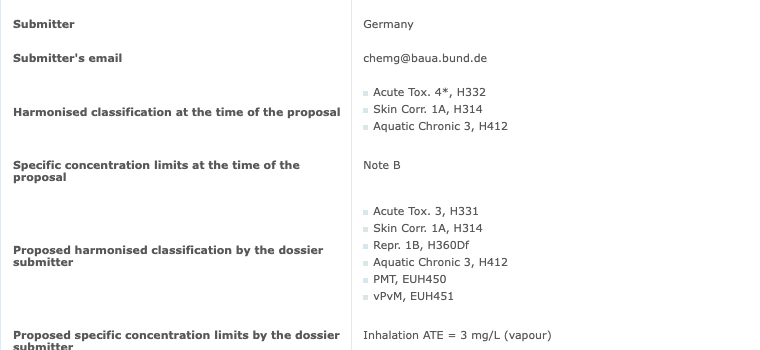 Figure 1. Key information from ECHA's TFA CLH registry: Germany's proposal includes Repr. 1B, PMT and vPvM classification entries.
Why TFA Matters for Fluorinated Pesticides
This TFA classification development has attracted close attention from the agrochemical sector because TFA can originate not only from certain industrial fluorinated substances, but also from the environmental transformation of several pesticide active substances containing trifluoromethyl groups. In recent years, EU scrutiny of PFAS pesticides has gradually extended beyond the parent active substance itself to more complex review dimensions, including persistent terminal metabolites, groundwater mobility, drinking-water exposure and toxicological reference values.
The non-renewal of flufenacet and Denmark's early restrictions on certain pesticide products capable of forming TFA both show that the TFA issue has become an important factor affecting expectations for EU active substance renewal reviews and product authorisation. However, this trend should not be simplistically interpreted as meaning that fluorinated pesticides will immediately leave the market. A more realistic assessment is that future EU reviews of fluorinated pesticides will place greater emphasis on persistent terminal metabolites, groundwater exposure and the feasibility of alternatives.
Industry Organisations Emphasise the Need to Distinguish Hazard Classification from Actual Risk
From an industry perspective, the core of the TFA issue is not to deny concerns over environmental persistence, but to require the regulatory system to clearly distinguish between hazard classification and actual risk. In response to ECHA's proposal to reclassify TFA, CropLife Europe has stated that the current procedure relates to hazard classification, and that whether TFA presents a toxicological concern under realistic environmental exposure conditions should be judged in light of exposure levels, existing risk assessments and substance-by-substance evaluation.
The organisation also argues that the CLH process should be allowed to reach its conclusion without being pre-empted by excessive early measures at Member State or regional level before a harmonised scientific assessment is completed. In its input to the Standing Committee on Plants, Animals, Food and Feed (SCoPAFF), CropLife Europe also supported further assessment of all sources of TFA and stressed that generating the relevant data takes time; a substance-by-substance, evidence-based evaluation should therefore be supported.
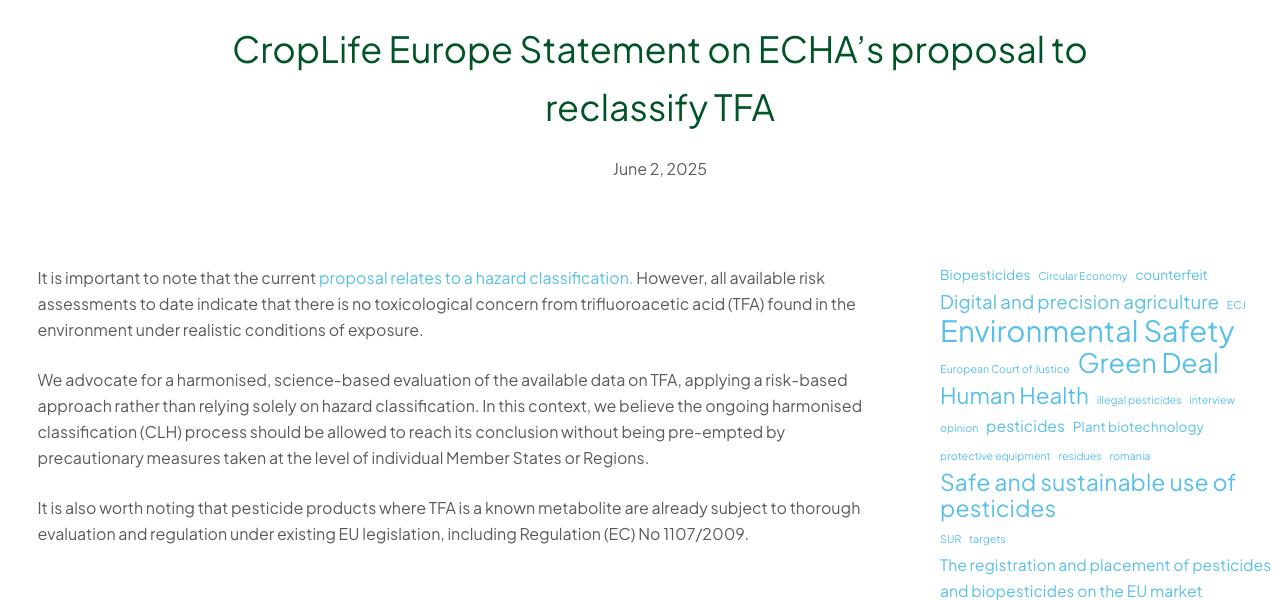 Figure 2. Screenshot of CropLife Europe's statement on ECHA's proposal to reclassify TFA.
The Interface Between CLP and Pesticide Legislation Will Be a Key Follow-up Issue
From the perspective of pesticide regulation, the difficulty of the TFA issue lies in the EU's ongoing efforts to connect new CLP hazard classes such as PMT and vPvM with the plant protection product approval system under Regulation (EC) No 1107/2009. If CLP hazard classifications are mechanically carried over into pesticide approval and renewal decisions, registration uncertainty for fluorinated pesticides could increase significantly.
The industry's concern therefore focuses on how regulatory consequences are transmitted. For active substances capable of forming TFA, evaluation should be carried out case by case, taking account of real-world exposure, necessity of use, application rates, risk-mitigation measures, availability of alternatives and agricultural production needs, rather than reaching an automatic negative conclusion based solely on structural labels or a single hazard class.
EFSA Has Proposed a New ADI, but the Final Opinion Is Still Pending
EFSA is also reassessing the health-based guidance values (HBGVs) for TFA. Publicly available materials show that EFSA's draft statement proposed an acceptable daily intake (ADI) of 0.03 mg/kg bw per day and, for the first time, an acute reference dose (ARfD) of 0.6 mg/kg bw, both expressed as sodium trifluoroacetate. However, these values remain at the draft and follow-up review stage, and the final scientific opinion has not yet been formally published. The outcome will directly affect future residue, groundwater and consumer risk assessments for pesticides with TFA metabolites.
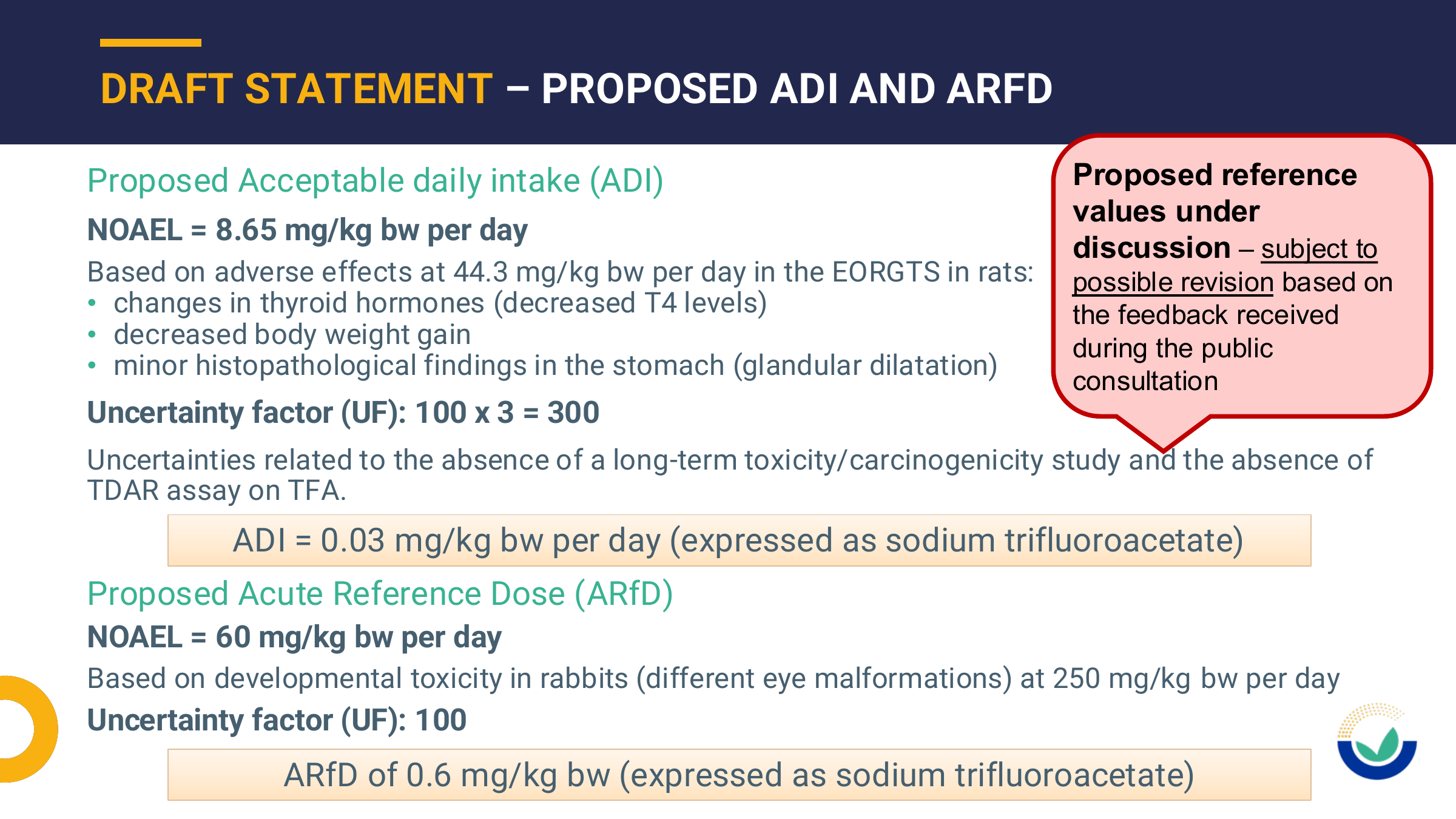 Figure 3. Proposed ADI and ARfD for TFA listed in EFSA's public materials.
Companies Should Assess Three Categories of Compliance Risk Early
For agrochemical companies, the priority at this stage should not be to wait until the legislation is finalised, but to start work early in three areas. First, companies should systematically review their existing fluorinated active substances and product portfolios, identifying parent structures that may form TFA and the main use scenarios. Second, they should strengthen data on environmental fate, soil degradation, groundwater leaching and metabolite formation, especially the evidence chains most relevant to EU renewal reviews and Member State authorisation. Third, they should monitor the combined effects of EFSA health-based guidance values, ECHA CLH opinions, the REACH PFAS restriction proposal and early measures by Member States, and assess in advance the registration-maintenance costs and alternative options for products exported to the EU.
EU Regulatory Signals and Industrial Constraints Coexist
More broadly, the EU has in recent years continued to intensify policy action on PFAS, pesticide-use reduction, endocrine disruptors, new hazard classes and drinking-water protection, which has clearly increased the costs of chemical pesticide innovation and product maintenance. Strict environmental governance has its policy objectives, but when multiple regulatory tools are advanced in parallel, they may also constrain the EU's own agrochemical industry, crop protection toolbox and agricultural production resilience.
The European Commission has repeatedly called in recent years for regulatory simplification, reduced burdens on companies and improved competitiveness, which itself shows that an overly complex compliance system has become an issue European industrial policy must address. For Chinese agrochemical companies, the EU's TFA classification development is an important regulatory signal, but it should not be understood as a short-term ban. Companies should prepare compliance evidence proactively on the basis of scientific data and tiered risk assessment, while continuing investment in non-fluorinated alternatives, biological pesticides and precision application technologies, so as to secure a more stable market position between tighter regulation and agricultural production needs.
Key Timeline
Date | Item | Industry relevance |
26 May 2025 | ECHA launched the public consultation on the TFA CLH proposal | TFA entered a more stringent hazard identification process. |
1-5 June 2026 | RAC-77 formed an opinion on TFA classification | Sends a clear regulatory signal, but is not yet a legally binding classification. |
31 July 2026 | Deadline for EFSA's assessment of TFA health-based guidance values | The proposed ADI/ARfD may affect subsequent risk assessments. |
Coming years | Commission to advance the CLP Annex VI ATP amendment | Formal harmonised classification still requires procedures and transition periods. |
Note: For subsequent regulatory milestones, ECHA's official RAC Opinion and the Commission's ATP documents should be used as the authoritative references.
References
ECHA, Registry of CLH intentions until outcome: Trifluoroacetic acid, CAS 76-05-1.
ECHA, Minutes of the 77th Meeting of the Committee for Risk Assessment (RAC-77), RAC/M/77/2026, 5 June 2026 (based on user-provided material; the official ECHA public version should prevail).
EFSA, EFSA's risk assessments on PFASs, 2025.
European Commission / DG SANTE, Regulation 1107/2009 - update and ongoing developments, EFSA PSN, November 2025.
CropLife Europe, Statement on ECHA's proposal to reclassify TFA, 2 June 2025.
CropLife Europe, Input for SCoPAFF meeting 11-12 March 2025.
Huang Chao et al., "Regulatory developments of PFAS pesticides in the EU and the US and their implications for China", World Pesticide, Vol. 48, No. 5, 2026.



Most Popular
- 1 Brazil Launches Sispa: A Unified Digital Platform for Pesticide Registration
- 2 South Korea Issues Guidelines on Establishing Biocidal Product Names, Clarifying Rules on Identical Names, Additional Names, and Prohibited Expressions
- 3 Vietnam to Officially Abolish Quality Pre-Inspection for Imported Fertilizers Starting July 1
- 4 EU Imposes Strict Regulatory Measure: 12 Pesticide Co-formulants Added to Banned List
- 5 California Releases New Regulation on Groundwater Protection List: Added 51 New Active Ingredients