


2019-04-11
China Announced 4th Batch of Designated Test Institutions for Pesticide Registration
On 4 Apr 2019, China MoARA released the Announcement 156 to designate 24 labs for pesticide registration experimentation.
 Predictions on China’s Fertilizer Market in 2019
The removal of export taxes on chemical fertilizers, the enactment of the “Soil Pollution and Control Law”, and series of new/revised fertilizer standards are bringing far-reaching effects on Chinese fertilizer market, which is invariably moving towards rationalization, high-efficient, specialization and greenization. This article offers an overall conclusion on the likeliest regulatory and market outcomes in 2019, as well as an in-depth analysis of the new tendencies.
Liberalization on secondary/micronutrients claim
The labeling and marking of all commercial fertilizers should conform to the national standard, “GB 18382-2001 Fertilizer Marking: Presentation and Declaration”. The mandatory standard was promulgated by AQSIQ (now known as SMAR) as early as 2001 when China has not yet developed intact and unified testing methods for secondary/micronutrients. Expedient measures were adopted to protect growers from being misled:
Compound or complex fertilizers containing secondary/micronutrients are generally prohibited from claiming on their medium/micronutrient content;
Secondary nutrient fertilizers should mark the name and content of each secondary nutrient as well as the total secondary nutrient. If a secondary/micronutrient in a secondary nutrient fertilizer is below 2%/0.02%, the fertilizer shall not be marked with the secondary/micronutrient;
Along with the scientific development and the market penetration of secondary/micronutrient fertilizers, both the growers and fertilizer producers have realized the importance of secondary/micronutrient in agricultural production. In late 2017, MIIT and 12 other ministries drafted an amendment to GB 18382, which has been submitted for final approval. The amendment removed the restriction on secondary/micronutrient claims. Considering the time required for a compulsory standard nationwide, the revised standard is very likely to be promulgated this year.
Biostimulant is r

2019-03-27
China Bans Agricultural Uses of Fipronil
On 25 Mar 2019, China MoARA issued the Announcement 148 to ban all agricultural uses of Fipronil insecticides. The injunction aims at fulfilling the requirements contained in the “Food Safety Law”, “Regulation on the Administration of Pesticides” and the “Stockholm Convention on Persistent Organic Pollutants”.

2019-03-11
China MoARA Detected 511 Non-conforming Pesticides in 2018
On 8 Mar 2019, China MoARA released the results of supervision and spot check on pesticides during FY2018 and the total qualification rate was 93.2%. 370 pesticides were determined to be counterfeit pesticides that added with unregistered active ingredients/ absence of nominal active ingredients. Only 54.4% of the biopesticides were found to be eligible as most of them were added with Chlorantraniliprole, Pyraclostrobin, Tolfenpyrad and other chemical ingredients.

2019-03-07
China MoARA Newly Designates 18 Labs for Pesticide Registration
On 6 Mar 2019, China MoARA released the Announcement 143 to designate 18 labs for pesticide registration experimentation. China implemented new pesticide regulations since 2017 and the Ministry has re-designated 2 batches of labs approved for pesticide registration. Up to now, a total of 54 labs have been approved to generate data supporting pesticide registration.

2019-03-06
China MoARA Scheduled the Priorities for Crop Production FY2019
On 21 Feb 2019, China MoARA released the “Crop Production Work Focus for 2019”. The main grain product capacity would be stable in 2019. Furthermore, the ministry schedules the legislative process on agricultural input and crop protection regulations and the new developing of fertilizer regulation was officially planned.

2019-03-05
China MoARA Consults on 3 Lists for Minor-use Pesticide Registration
On 25 Feb 2019, China MoARA released 3 draft lists to support the registration of minor crop use pesticides and will solicit opinion until 3 Mar 2019.
2019-03-04
China Promulgated Implementing Plan for Agricultural Quality Revitalization
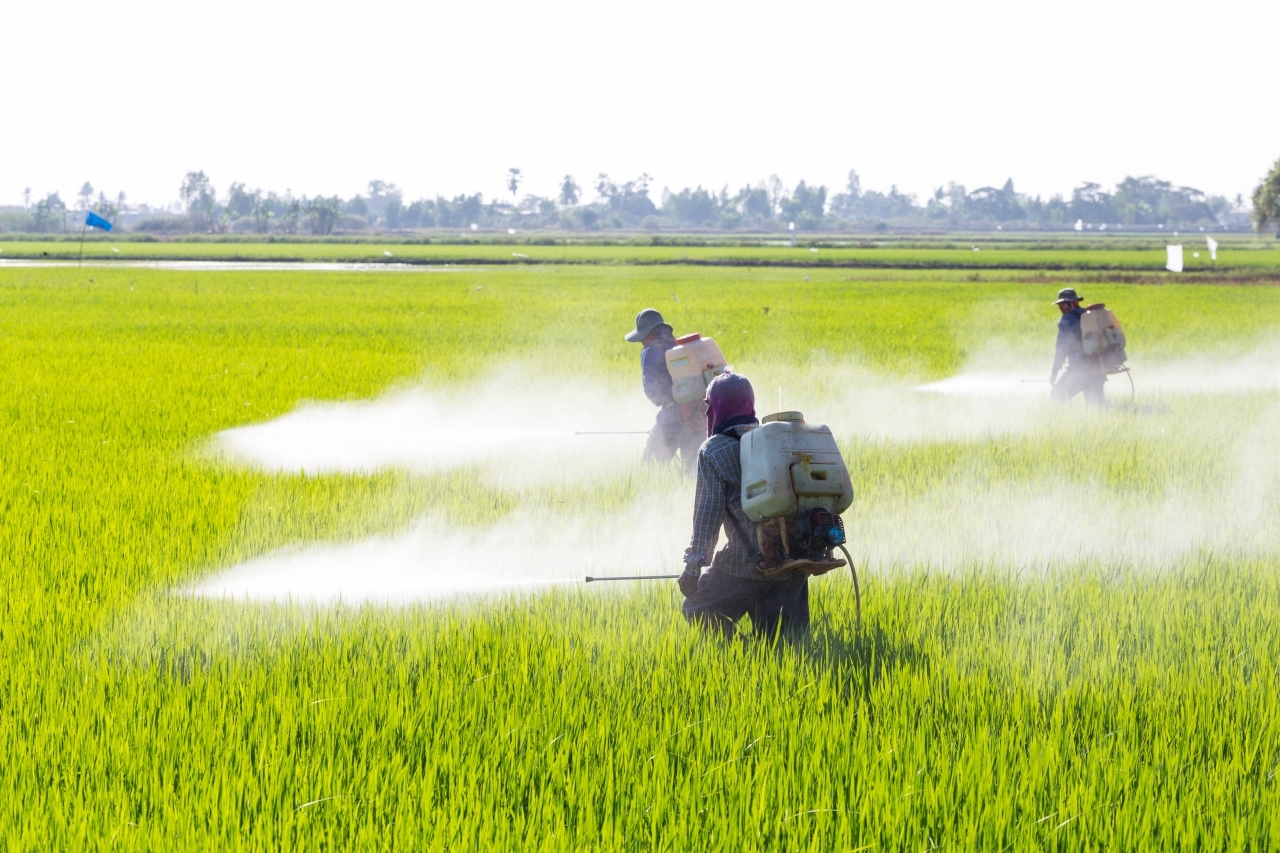
On 11 Feb 2019, the Ministry of Agriculture and Rural Affairs (MoARA), the National Development and Reform Commission (NDRC), the Ministry of Science and Technology (MoST), the Ministry of Finance (MoF), the Ministry of Commerce (MoFCOM), the State Administration of Market Regulation and the National Food and Strategic Reserves Administration (NFSRA) jointly issued the “National Strategic Plan for Agricultural Revitalization through Quality Enhancement (2018-2022)”, which was compiled under the National Strategic Plan for Rural Development (2018-2022), aimed at boosting the agricultural efficiency and competitiveness and transforming China from an advanced agricultural country. The document acknowledged the recent achievements in agricultural development, but China's agriculture needs to embrace the crucial opportunities of rural development and consumption upgrading. Series of quantitative goals to be achieved by 2022, including quality of agricultural products, industrial structure, output efficiency, quality of farmers and international competitive strength. 4 developmental directions were pointed out and 7 massive agricultural projects will be implemented.

2019-02-27
China NHC Released Hygienic Standard for Efficacy Tests of Antimicrobial Products
On 30 Jan 2019, the National Health Commission published 6 voluntary hygienic standards for biocidal products, which will take effect on 1 Jul 2019. Among them, the “WS/T 650-2019 Evaluating Method for Efficacy of Antibacterial and Bacteriostasis” was firstly issued. The standard specifies 13 testing methods, procedures the application scope and criteria for commonly used items with antimicrobial claim including hand cleaner, sprays, gels, wet wipe, facial mask, sanitary towel, diaper, towel, underwear, socks, fabric, plastics, floorboards and tiles, etc. These antimicrobial products are mostly categorized as the Category II disinfection products but comparatively in a regulatory grey zone because most of them are not yet included into the pre-marketing assessment. Considering the complicacy of product type and feature, WS/T 650-2019 can be an evident progress and these commonly used antimicrobial products are likely to be brought into supervision after NHC made adequate clarification on product definition/scope, necessity of risk/safety assessment and relevant evaluation guidelines.

2019-01-07
China NATESC Warns against More Severe Pest Outbreaks in 2019
On 2 Jan 2019, China NATESC (National Agricultural Technology Extension and Service Center) made a pests forecast on 2019, which was concluded after a thorough expert consultation in December 2018. Based on the pest population, plant distribution, cropping pattern and climate trends, total affected area could reach 300 million hectares in 2019.
Most Popular
Opinions or requests
Please enter your opinions or requests regarding this site in the space below.
Submit